
When I introduced blog writing in DP English, my intention was fairly straightforward. I wanted students to analyze how writers constructed arguments in digital spaces: how tone shifts across paragraphs, how personal anecdotes function rhetorically, and how structure shapes audience engagement. To support this, I introduced several mentor texts, including articles from The Father Hood, a blog exploring modern fatherhood and family life.
What happened next surprised me.
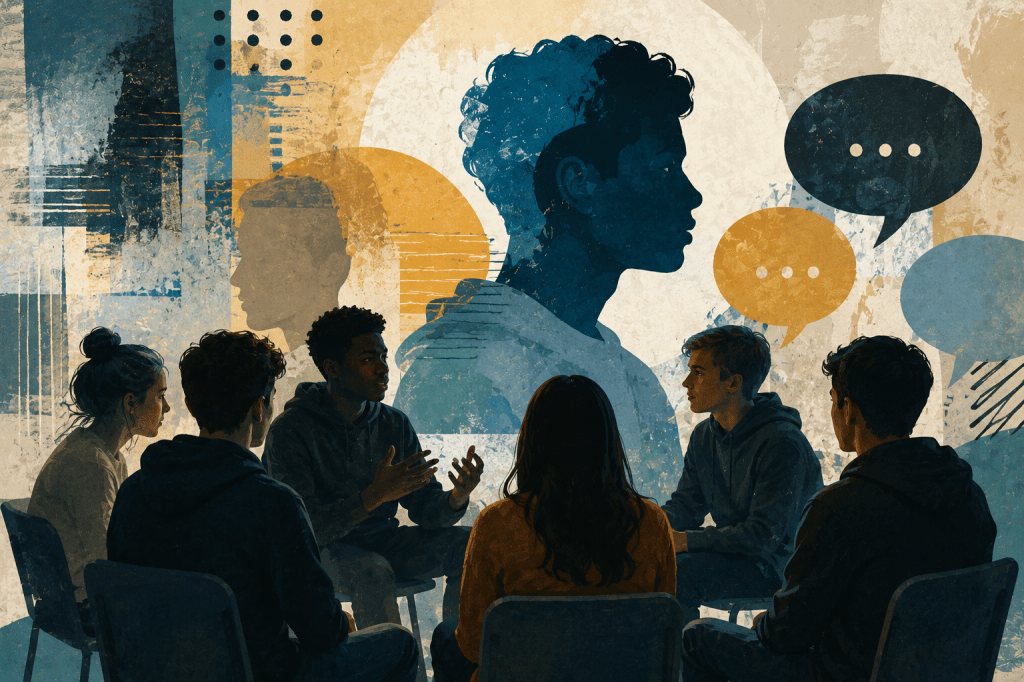
The analytical discussions I had planned quickly evolved into something much deeper. Students, particularly many of the boys, began engaging in conversations about masculinity, emotional vulnerability, fatherhood, pressure, and identity. They debated why men are often discouraged from expressing emotion openly. They reflected on cultural expectations surrounding strength and success. Some discussed relationships with their fathers. Others examined the ways social media shapes ideas about what masculinity is supposed to look like.
At one point, I remember stepping back and realizing that the students were no longer simply analyzing texts. They were using literacy as a way to examine themselves and the world around them.
That experience stayed with me because it challenged some of the assumptions I had unconsciously carried about equity conversations in schools.
In education, discussions about equity often focus — rightly and importantly — on the experiences of historically marginalized groups. But I have increasingly come to believe that equity work also requires us to examine the pressures, expectations, and social conditioning placed on boys and men. This does not diminish the realities of sexism or structural inequality. Rather, it recognizes that gender expectations affect everyone, including boys who are often navigating emotional rules they did not create but are still expected to follow.
What struck me most during these discussions was not disengagement, but the opposite.
When students encountered texts that felt relevant to their lived experiences, they leaned in intellectually and emotionally. The boys in the room did not avoid discussing vulnerability. They actively wanted to discuss it. What they appeared to need was permission, structure, and a classroom environment where such conversations felt safe.
This has made me increasingly skeptical of simplistic conversations about “male disengagement” in literacy.
Too often, these discussions reduce boys to broad stereotypes: boys do not like reading, boys dislike emotional discussion, boys struggle with literacy because they prefer action over reflection. But classroom experiences frequently reveal something more complicated. Many boys are willing to engage deeply with literacy when texts connect to identity, relationships, uncertainty, or questions they are already wrestling with internally.
The issue may not simply be whether boys are willing to engage. It may also be whether schools consistently provide spaces where boys feel able to engage authentically.
English classrooms occupy a particularly important role here because literature and language naturally invite identity exploration. Dialogic classroom research suggests that discussion-based environments allow students to construct meaning collaboratively while testing ideas, perspectives, and identities through conversation (Alexander, 2018). When students encounter texts that reflect emotional complexity, social tension, or conflicting expectations, classrooms can become spaces where adolescents begin articulating questions they may not otherwise voice openly.
Importantly, this kind of discussion requires emotional safety.
The conversations in my classroom only emerged because students trusted that they could speak without ridicule or dismissal. Vulnerability rarely appears automatically in classrooms. It is usually the result of carefully cultivated norms, respectful listening, and the gradual development of relational trust. Students need to know that complexity is welcome. They need to know they can speak honestly without immediately being categorized, corrected, or mocked.
I also realized during these discussions how rarely masculinity itself is examined explicitly within English classrooms.
We often analyze gender representation in literature, but conversations about masculinity frequently remain implicit rather than direct. Yet masculinity shapes characters, narratives, relationships, conflict, and identity across countless texts. More importantly, it shapes students themselves. Avoiding those conversations does not mean students are not thinking about them. It simply means they may think about them without structured opportunities for reflection.
What I remember most from that unit is not a particular essay or analytical insight. It is the atmosphere in the room during those conversations. Students were animated, thoughtful, reflective, and, at times, unexpectedly vulnerable. The texts had opened a door that many of them clearly wanted to walk through.
Sometimes the most powerful classroom discussions begin when students encounter ideas they rarely see explored openly in school. And sometimes literacy becomes most meaningful when it gives students language for questions they were already carrying long before they entered the classroom.
References
Alexander, R. (2018). Developing dialogic teaching: Genesis, process, trial. Research Papers in Education, 33(5), 561–598. https://doi.org/10.1080/02671522.2018.1481140






Leave a Reply