

Last semester, during independent reading time, one of my ninth-grade students, Sam, was completely engrossed. He was reading a book about survival in the wilderness. I asked him what he thought the author wanted readers to take away. He paused and looked up. Then, he said, “I’m not sure. I just liked the action scenes.”
It hit me: Sam could decode every word on the page with ease. He read fluently, had a decent vocabulary, and even loved the topic. But he hadn’t yet developed the tools to explore beyond the text’s surface. He needed to comprehend it with depth and purpose.
A Layered Approach to Literacy
In their article “The Science of Reading Comprehension Instruction”, Nell et al. (2021) propose a layered, research-backed model that moves past either/or thinking. Instead, it calls for a comprehensive, synergistic approach. This method adapts to students’ needs. It also embraces the full complexity of what it means to understand a text.
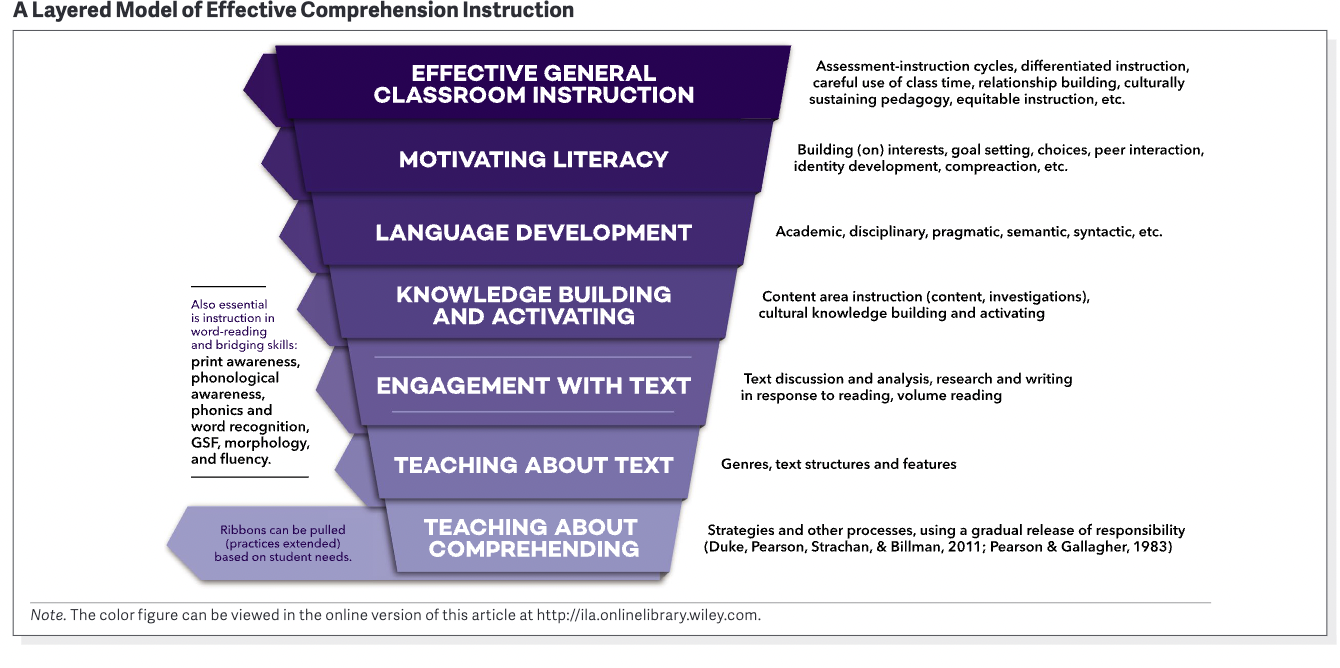
Effective General Classroom Instruction
At the foundation lies responsive, culturally sustaining, data-informed teaching. Think: clear routines, strong relationships, and equitable instruction.

Motivating Literacy
Engaged readers are better comprehenders. Students thrive when we connect reading to their identities, interests, and choices. Motivation isn’t fluff – it’s a driving force.
Language Development
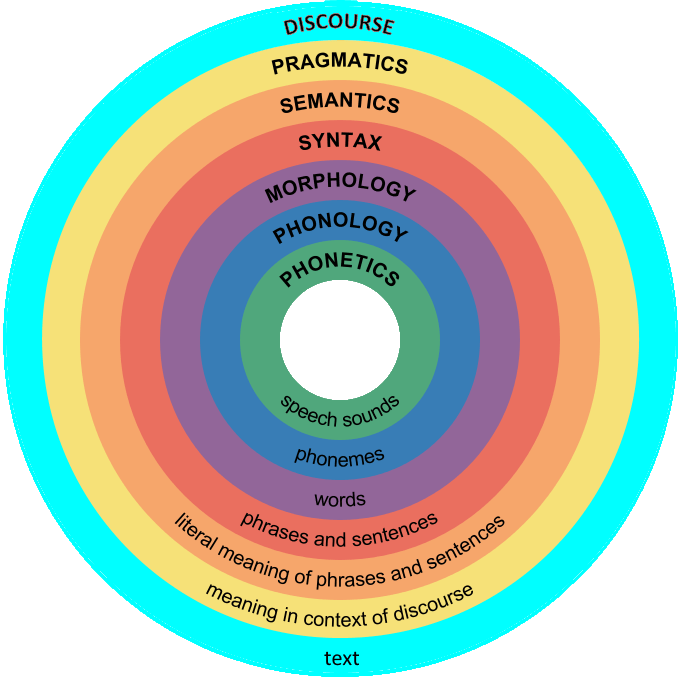
From vocabulary to syntax and pragmatics, language instruction is core. It’s not just about decoding; it’s about using academic and everyday language to make sense of the world.
Knowledge Building and Activating
Comprehension improves when students know more. Integrating science, history, and cultural knowledge across the curriculum builds the background students need to understand texts deeply.
Engagement with Text
We support comprehension when we give students time to read, write about reading, and talk about what they read. Strategies like scaffolded silent reading, reciprocal teaching, and collaborative discussions all belong here.

Teaching About Comprehending
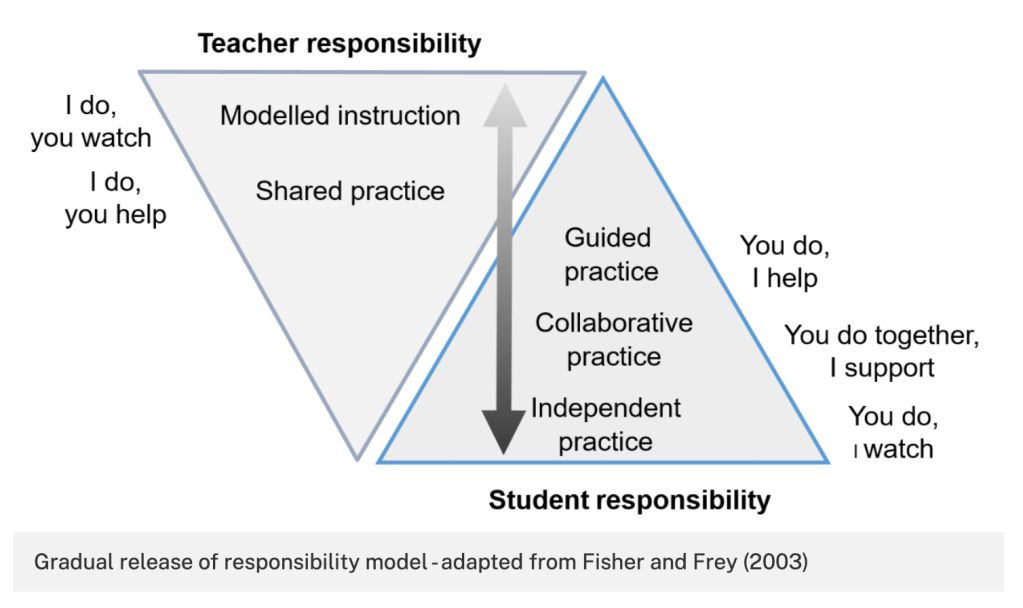
At the bottom layer are comprehension strategies – monitoring understanding, summarizing, questioning, and visualizing. When taught in authentic contexts, they equip students to be purposeful, metacognitive readers.
Final Thoughts: Every Reader Deserves the Full Picture
Sam reminded me that fluent reading is not the same as understanding. When students like him race through words, they struggle to grasp deeper meaning. It’s not a lack of effort. It’s a lack of tools.
That’s why the layered model of reading comprehension is so powerful. It refuses to simplify literacy into a single focus. Instead, it acknowledges the rich, interwoven strands of motivation, language, background knowledge, engagement, and strategy. Each strand is essential. None is sufficient on its own.
As educators, we don’t have to choose between teaching phonics or comprehension, language or motivation. We can do both—and more—when we teach with intention, flexibility, and the whole reader in mind.
When we commit to this layered approach, we empower students like Sam not just to enjoy the story. They learn to understand it, gain lessons from it, and carry it with them.
Because in the end, reading isn’t just about finishing the page. It’s about finding meaning in the world.
References
Duke, N. K., Ward, A. E., & Pearson, P. D. (2021). The science of reading comprehension instruction. The Reading Teacher, 74(6), 663–672. https://doi.org/10.1002/trtr.1993
Learning for Action. (2018). Data matters framework. https://learningforaction.com/lfa-blogpost/data-matters-framework
New South Wales Department of Education. (2025). Comprehension. https://education.nsw.gov.au/teaching-and-learning/curriculum/literacy-and-numeracy/teaching-and-learning-resources/literacy/effective-reading-in-the-early-years-of-school/comprehension
Oczkus, L. D. (2022). Reciprocal teaching at work: Reading rescue for every student [PDF]. Brigham Young University. https://education.byu.edu/sites/default/files/media/cites/files/2022/Oczkus%20Reading%20Rescue%20w%20website%20links%20Reciprocal%20Teaching2022.pdf
University at Albany, State University of New York. (2020). Unit 1: Introduction to pragmatics in language education. KNILT (Knowledge Network for Innovations in Learning and Teaching). https://knilt.arcc.albany.edu/Unit_1:_Introduction_to_Pragmatics_In_Language_Education
YouTube. (2013). Motivating literacy learners through interest-based choices. [Video]. https://youtu.be/RwlhUcSGqgs
YouTube. (2020). Reciprocal teaching in the classroom. [Video]. https://youtu.be/6wKA3dWc7J4
YouTube. (2014). Teaching students about text features and structures. [Video]. https://youtu.be/qSGX34Zf82c
Join the Conversation
How are you layering literacy instruction in your classroom? Are there areas where your students, like Sam, decode fluently but struggle with deeper understanding?
I’d love to hear your insights, challenges, and strategies. Share your thoughts in the comments, or tag me on social media to keep the conversation going. Together, we can build classrooms where every student doesn’t just read – they truly comprehend.


 Research for Teachers
Leave a comment