

I had a group of students once who were assigned to read a biography of Lorca before diving into The House of Bernarda Alba. They came to class feeling a bit confused—most of them were expecting to jump straight into the drama, not wade through pages of historical context and details of Lorca’s life. As we started discussing his early life, his political activism, and the cultural tensions in Spain at the time, I could see their eyes glazing over. One student even said, “Why do we have to read all this before the play? It’s like reading a textbook.”
To make it more engaging, I had them highlight moments in Lorca’s life that seemed to connect with the themes of repression and societal expectations—concepts they would later encounter in The House of Bernarda Alba. By focusing on how his personal experiences with family, gender, and political unrest influenced his writing, the biography began to come alive for them. It wasn’t just about his life anymore; it was about understanding the world that shaped his plays. By the time they finally got to The House of Bernarda Alba, they had a deeper appreciation for the layers in the play, making the characters’ struggles feel more real and urgent.
Why Nonfiction Reading Matters
The National Council of Teachers of English (2025) emphasizes the crucial role nonfiction literature plays in K-12 education, advocating for its broader use in classrooms. Here are three key highlights from their position:
- Engages Critical Thinking: Nonfiction literature helps students develop critical thinking skills by offering multiple perspectives on historical and current events, scientific discoveries, and social issues.
- Addresses Important Social Issues: It tackles subjects like racism, oppression, and societal change, empowering students to confront global and local challenges with informed perspectives.
- Supports Diverse Literacy: Nonfiction literature enhances literacy by integrating factual information with storytelling techniques, offering a dynamic and multimodal reading experience that builds students’ informational and visual literacy.
Understanding the Challenges of Nonfiction Reading
In Nonfiction in the Classroom: Exciting Adventure or Perilous Journey by Kirby Andler (2013), the author discusses the challenges and strategies for teaching nonfiction in middle school classrooms. Andler highlights several obstacles, including:
- Lack of Familiarity with Nonfiction Structures: Students often struggle with the more complex structures of nonfiction texts, such as cause/effect or compare/contrast, which differ from the more familiar narrative structures of fiction (Camp, 2000 as cited in Andler, 2013)).
- Student Engagement: Students are typically more familiar with and interested in fiction, making nonfiction seem less engaging. However, aligning nonfiction reading with students’ curiosity about real-world topics can boost motivation (Galda, Cullinan, & Sipe, 2010 as cited in Andler, 2013).
Strategies to Help Students Read Nonfiction Effectively
Teach Students to Identify Text Structures

Use the Power of Pre-Reading Strategies
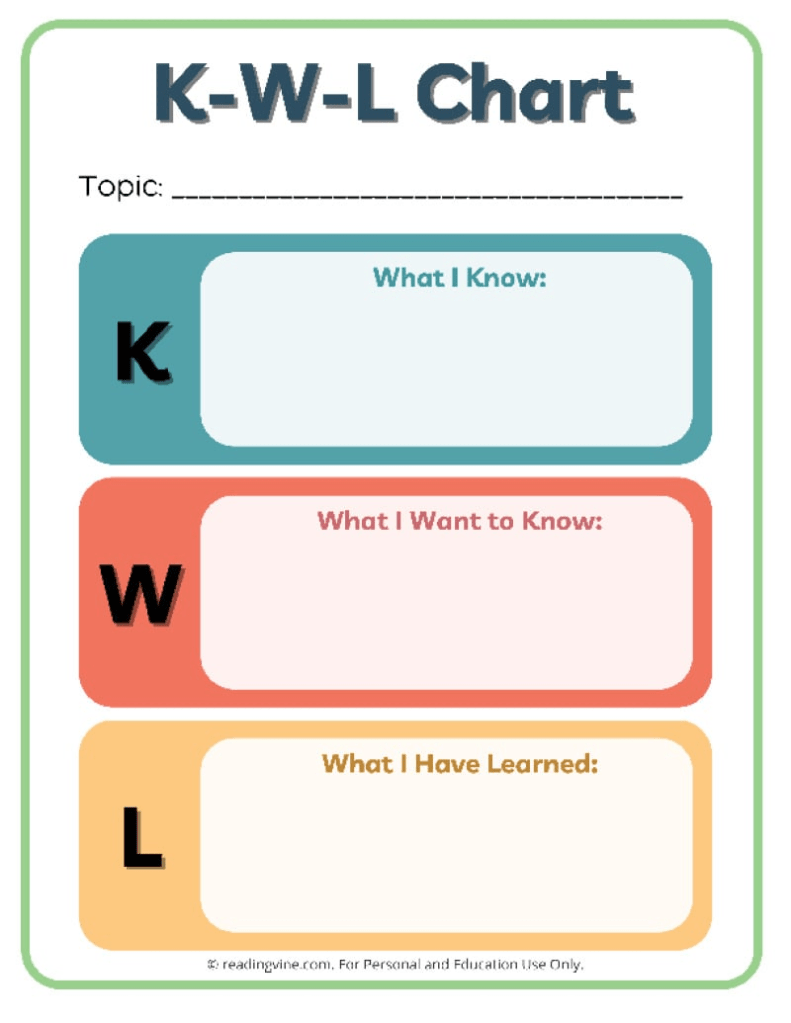
- Activate prior knowledge:
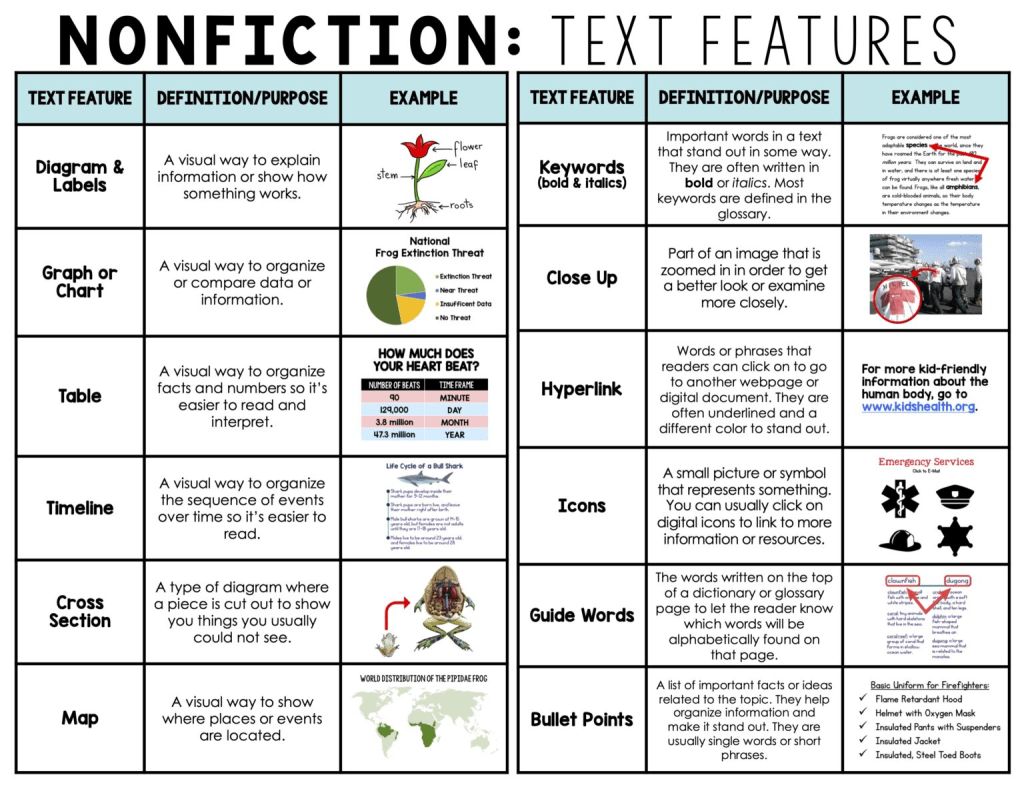
- Preview text features:

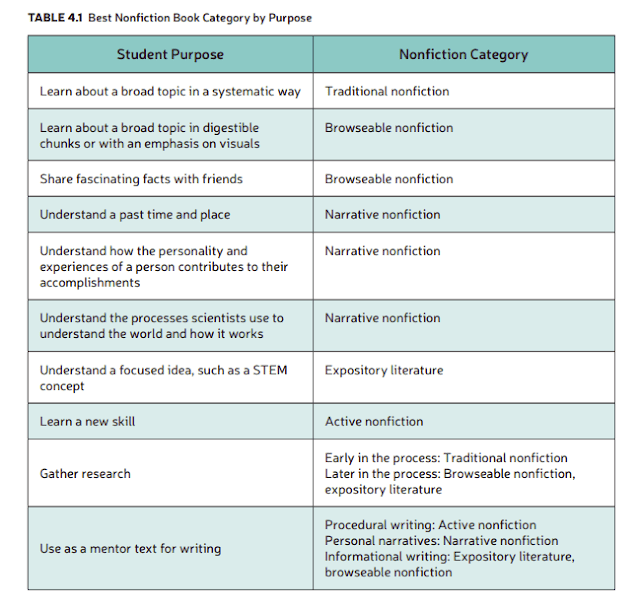
- Set a purpose for reading:
Encouraging Active Engagement Through Discussion & Writing
- Socratic Seminars & Debates: Applying nonfiction readings to real-world issues through Socratic Seminars
- Quick Writes & Summarization: Encouraging students to synthesize information in their own words.

- Text-to-Text, Text-to-Self, Text-to-World Connections: Encouraging deeper engagement beyond surface-level comprehension.

Conclusion
Incorporating nonfiction reading into the classroom provides students with the tools to engage critically with the world around them, building literacy skills that extend beyond the page.
Through the experiences shared, such as analyzing Lorca’s biography before The House of Bernarda Alba, we see how understanding an author’s context can enrich students’ interpretations of a text.
Key strategies for helping students engage with nonfiction include teaching text structures, using pre-reading strategies like KWL charts, and encouraging active engagement through writing, discussions, and real-world connections.
By integrating nonfiction across disciplines, teachers not only enhance students’ comprehension but also prepare them for the information-driven world they will face beyond school.
Try this: I encourage teachers to try one new nonfiction strategy this week and observe its impact on student engagement and comprehension. Nonfiction has the power to transform students into informed, critical thinkers—making the journey from confusion to understanding all the more rewarding.
Join the conversation!
I’d love to hear your thoughts on these strategies for engaging students with nonfiction! How do you incorporate nonfiction reading into your classroom, and what challenges or successes have you experienced?
References
Andler, K. (2013). Nonfiction in the classroom: Exciting adventure or perilous journey. Illinois Reading Council Journal, 42(1), 13-22.
Camp, D. (2000). It takes two: Teaching with twin texts of fact and fiction. The Reading Teacher, 53(5), 400-408.
Celebrate Science. (2022, November). 5 kinds of nonfiction and student purpose. Celebrate Science. https://celebratescience.blogspot.com/2022/11/5-kinds-of-nonfiction-and-student.html
The Collaborative Class. (2025). Nonfiction text features reference sheet freebie. The Collaborative Class. https://thecollaborativeclass.com/nonfiction-text-features/
Daniels, H. (2002). Literature circles: Voices and choice in book clubs and reading groups (2nd ed.). Stenhouse.
Galda, L., Cullinan, B. E., & Sipe, L. R. (2010). Literature and the child (7th ed.). Wadsworth.
Khan, B. (2024, June 11). Increase text connections with sentence frames. Literacy in Focus. https://litinfocus.com/increase-text-connections-sentence-frames/
Moss, B., & Hendershot, J. (2002). Exploring sixth graders’ selection of nonfiction trade books. Reading Teacher, 56(1), 6-17.
National Council of Teachers of English. (n.d.). Position statement on the role of nonfiction literature in K-12 education. National Council of Teachers of English. https://ncte.org/statement/role-of-nonfiction-literature-k-12/#:~:text=Nonfiction%20literature%20contextualizes%20primary%20source,and%20shares%20new%20scientific%20discoveries.
Shanahan, T., Fisher, D., & Frey, N. (2012). The challenge of challenging text. Educational Leadership, 69(6), 58-62.
Smekens Education. (2025). Teach readers to discern text structures. Smekens Education. https://www.smekenseducation.com/teach-readers-to-discern-text-s/


 Research for Teachers
Leave a comment